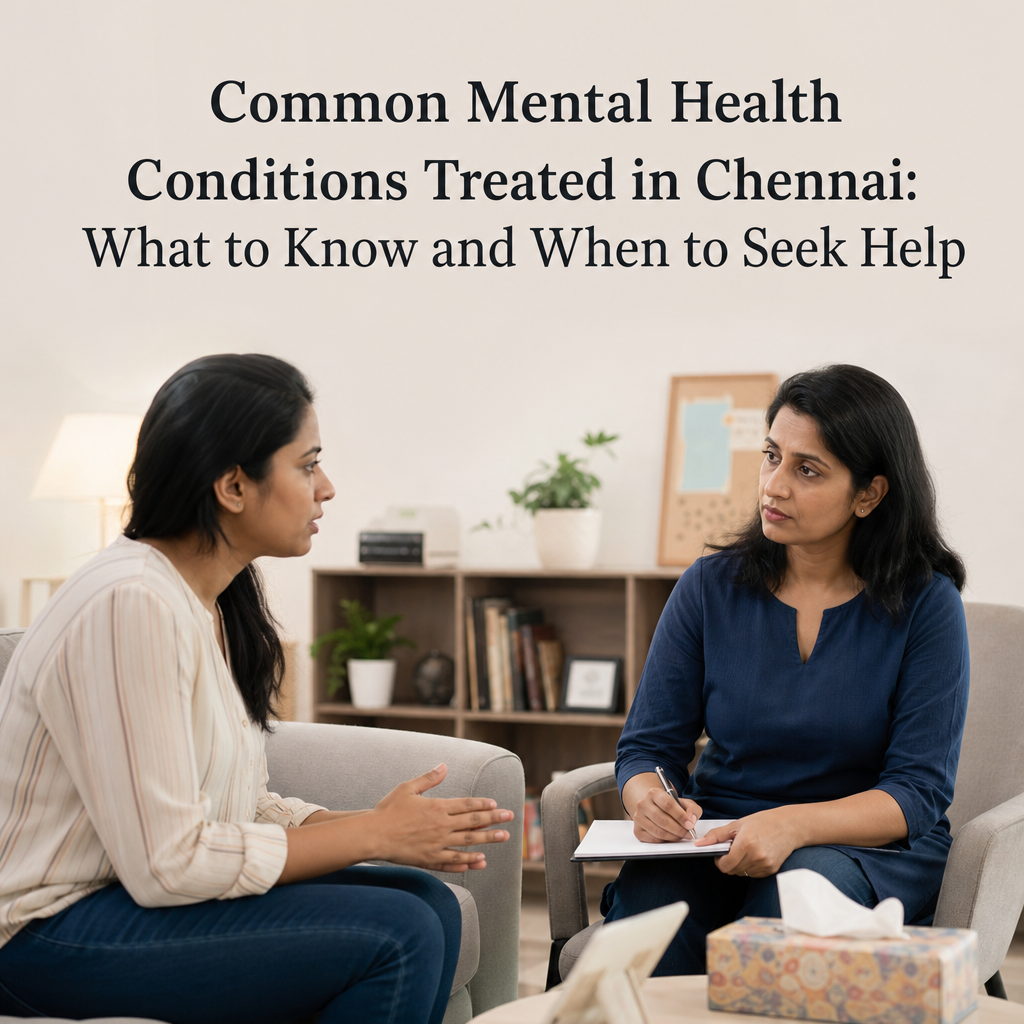
Mental health challenges can affect anyone—regardless of age, background, or how “together” a person looks day to day. If you’re searching for support in Chennai, you may be wondering which conditions are commonly treated at psychiatric clinics and what early signs to watch for.
This guide covers some of the most frequent mental health conditions people seek care for, how they typically present, and what “treatment” often means in real life (medication, counseling, or a combination).
Note: This article is educational and not a substitute for professional diagnosis.
---
1) Depression: More Than Just “Feeling Low”
Depression is more than sadness or temporary low mood. It can affect sleep, appetite, energy, concentration, motivation, and overall interest in life.
Common signs
- Persistent sadness, emptiness, or hopelessness
- Loss of interest in activities once enjoyed
- Changes in sleep (insomnia or oversleeping)
- Fatigue or low energy most days
- Difficulty concentrating or making decisions
- Feelings of worthlessness or excessive guilt
- Thoughts of death or self-harm (urgent)
Why treatment matters
Untreated depression can worsen over time and affect relationships, work, and physical health. Effective care may include medication, therapy, or both—often tailored to symptom severity and personal needs.
---
2) Anxiety Disorders: When Worry Becomes Constant
Anxiety is a normal human emotion, but anxiety disorders involve excessive fear, worry, or physical symptoms that persist and interfere with life.
Common signs (varies by type)
- Racing thoughts or constant “what if” thinking
- Restlessness, irritability, or feeling on edge
- Muscle tension, headaches, stomach upset
- Panic episodes (sudden intense fear with physical symptoms)
- Avoiding situations due to fear of embarrassment or harm
Types people commonly seek help for
- Generalized Anxiety Disorder (GAD): chronic worry about many aspects of life
- Panic Disorder: recurrent panic attacks and fear of future attacks
- Social Anxiety: fear of being judged or embarrassed in social settings
- Phobias: intense fear of specific situations or objects
What treatment often includes
Many people benefit from counseling/therapy (like CBT-style approaches) and, when needed, medications to reduce symptom intensity so people can function again.
---
3) Obsessive-Compulsive Disorder (OCD): Intrusive Thoughts and Rituals
OCD involves unwanted thoughts (obsessions) and repetitive behaviors (compulsions) done to relieve distress—even if the person knows the ritual may not truly “solve” the problem.
Common signs
- Intrusive, repetitive thoughts (e.g., contamination fears, harming fears, religious doubts)
- Compulsions like excessive washing, checking, counting, repeating phrases, or arranging items
- Distress if unable to perform rituals
- Spending significant time on thoughts or behaviors
Key point
OCD is treatable. Early intervention can reduce the cycle of obsession → anxiety → compulsion.
---
4) Bipolar Disorder: Mood Shifts That Go Beyond “Normal Ups and Downs”
Bipolar disorder includes episodes of depression and episodes of mania or hypomania—periods of unusually elevated or irritable mood.
Common signs of mania/hypomania
- Needing far less sleep without feeling tired
- Increased energy, talkativeness, racing ideas
- Feeling unusually confident or “invincible”
- Risky behavior (spending sprees, impulsive decisions)
- Irritability, agitation, or anger out of proportion
Why diagnosis matters
Treatment differs from depression alone. Mood stabilization strategies may be necessary, and self-treatment with antidepressants without proper evaluation can sometimes worsen cycling in certain individuals.
---
5) Psychotic Disorders: When Reality Feels Distorted
Some mental health conditions involve symptoms that affect perception, beliefs, or thinking in ways that feel “real” to the person.
Examples of symptoms
- Hearing voices or seeing things others don’t
- Strong beliefs that others find hard to challenge (delusions)
- Disorganized thinking or speech
- Withdrawal from others due to fear or confusion
What care typically focuses on
Psychotic symptoms often require medical assessment promptly, plus ongoing support and therapy to improve functioning, safety, and coping.
---
6) Post-Traumatic Stress Disorder (PTSD) and Trauma-Related Conditions
Trauma can come from accidents, violence, abuse, disasters, or prolonged stressful experiences. PTSD can develop when the nervous system remains “stuck” in threat mode.
Common signs
- Intrusive memories, nightmares, flashbacks
- Avoiding reminders of the event
- Feeling emotionally numb or detached
- Hypervigilance (constantly alert) and exaggerated startle
- Irritability, sleep difficulties, concentration problems
Important note
Trauma is not a “one size fits all” diagnosis. Treatment is commonly structured around safety, emotional processing, and building coping skills.
---
7) Substance-Induced Mental Health Issues (and Co-Occurring Disorders)
Substance use and mental health conditions frequently overlap. Some substances can mimic or worsen anxiety, depression, psychosis, sleep problems, and impulsivity—while untreated mental health symptoms can also increase substance use.
Common scenarios
- Alcohol used to “cope” with anxiety or insomnia, then worsening symptoms later
- Cannabis-related anxiety or paranoia in some individuals
- Withdrawal symptoms that resemble panic or depression
- Co-existing dependence + depression/anxiety requiring combined treatment planning
Why integrated assessment matters
Effective care usually involves evaluating both mental health and substance-related factors rather than treating symptoms in isolation.
---
8) ADHD (Attention-Deficit/Hyperactivity Disorder): Attention and Impulsivity Challenges
ADHD isn’t only for children. Many adults discover symptoms long after school years.
Common signs
- Inattention, forgetting, disorganization
- Losing things frequently, missing deadlines
- Restlessness or inability to sit still
- Impulsivity, interrupting, acting before thinking
- Difficulty sustaining focus—even with interest
Treatment overview
ADHD treatment often includes a mix of education, behavioral strategies, counseling, and—when appropriate—medication.
---
9) Stress-Related Problems and Adjustment Disorders
Not every mental health issue fits a “label” immediately. Sometimes people experience significant symptoms after a life change—job loss, relationship breakdown, bereavement, migration, major health events, and more.
Common signs
- Persistent worry or tearfulness
- Difficulty coping with daily demands
- Sleep and appetite changes
- Reduced performance at work or school
- Emotional outbursts or numbness
Why early support helps
Adjustment-related symptoms can become more severe if stress continues without support. Early intervention can prevent escalation.
---
How Clinics Typically Approach Treatment (What “Help” Often Includes)
When people ask what a psychiatric clinic can do, they’re often really asking:
Will I only get medicine?
Is therapy available?
How do you decide what I need?
In many care plans, treatment is individualized, and may include:
- Medication management for symptom relief and stabilization
- Counseling/psychotherapy to address coping, thoughts, behavior patterns, and emotional regulation
- Follow-ups to track response and adjust the plan
- Education so patients and families understand the condition
- Safety planning if there are risks such as self-harm or severe agitation
In Chennai, many people prefer a clinic setting where medical evaluation and counseling support are available under one coordinated approach—especially when symptoms are complex or long-standing.
---
When to Seek Help: Red Flags and “Don’t Wait” Signs
Consider seeking professional help if you notice any of the following:
- Symptoms last more than two weeks and disrupt daily life
- You can’t sleep or function normally due to worry, fear, or mood changes
- Daily functioning (work/study, relationships, hygiene, responsibilities) is significantly affected
- There are thoughts of self-harm or suicide
- You experience hallucinations or feel detached from reality
- Substance use is increasing to manage mental health symptoms
Emergency warning
If someone is in immediate danger, or there is active intent to harm themselves or others, treat it as an emergency and contact local emergency services right away.
---
Myths That Keep People From Getting Care
Myth: “I should be able to handle this alone.”
Many mental health conditions involve biology, stress physiology, trauma effects, and learned coping patterns—treatment is about recovery, not weakness.
Myth: “Therapy alone will fix everything.”
Some people need medication; some need therapy; many benefit from both.
Myth: “If I start medicine, I’ll stay on it forever.”
Not always. Some medications are temporary; the plan depends on diagnosis, severity, response, and long-term goals.
Myth: “Only severe cases need professional help.”
Early treatment often prevents symptoms from deepening and affecting more areas of life.
---
If You’re in Chennai: How to Prepare for Your First Appointment
If you’re considering care in Chennai, these steps can make the first visit more useful:
- Write down symptoms, when they started, and what makes them better/worse
- Track sleep, appetite, energy, panic episodes, or mood changes (even briefly)
- Bring a list of current medications, supplements, and any substance use
- Note medical conditions (thyroid problems, epilepsy, anemia, etc.) if relevant
- Prepare questions like:
- “What diagnosis is most likely and why?”
- “What treatment approach will we try first?”
- “How will we track progress?”
- “What side effects should I watch for?”
For many patients, having a plan that combines psychiatric evaluation and counseling-style support is especially helpful when symptoms are affecting both mind and day-to-day functioning.
---
Closing Thoughts
Mental health conditions are common—and help is available. Depression, anxiety disorders, OCD, bipolar disorder, trauma-related conditions, psychosis, ADHD, and stress-related problems are among the most frequently addressed concerns in psychiatric care.
If you’re looking for next steps, start with one clear goal: get an accurate assessment and a treatment plan that matches your symptoms, preferences, and lifestyle. In Chennai, clinics such as Chennai Mind Clinic—linked with the broader support ecosystem around psychiatric evaluation and counseling—serve as one local option people explore when they want coordinated mental health care.
If you’d like, tell me the condition(s) you’re researching (for example, “anxiety” or “depression”) and the age group (teen/adult), and I can create a more targeted guide: symptoms, treatment options, and what to expect from the first few weeks.
Keywords